Tuesday, August 09, 2016

BATH, THE PULTENEY BRIDGE, SOMERSET


Pulteney Bridge, with its sweeping horseshoe-shaped weir, is one of Bath’s most famous images. The bridge, which incorporates shops, was built by Robert Adam in 1769. The estimated cost of the bridge was £1, 000. It ended up costing £10, 000 which, over 200 years ago, was the equivalent of several million pounds today. Boat trips leave regularly from here going above the weir upriver to Bathampton. There are several cafes on or overlooking the bridge.The bridge was originally a toll bridge and boundary between parishes, built on condition that fresh water could be piped across it from the hills to the town houses.

Monday, July 25, 2016

THE MINACK THEATRE, CORNWALL


Unbelievable but this is Cornwall. It is called The Minack Theatre. It is an open-air theatre constructed above a gully with a rocky granite outcrop jutting into the sea. The theatre is at Porthcurno, four miles from Land’s End. The Minack is a unique theatre perched on the cliffs high above the Atlantic ocean. They put on a full programme of drama, musicals and opera every summer, together with music, comedy and story-telling. But they are open all year round for you to come and explore this amazing place and discover the incredible story of Rowena Cade who created the theatre.

Sunday, May 29, 2016

NORWICH, NORFOLK


Summer is the perfect time take a beautiful walk slightly to the south of Norwich city centre and experience the River Wensum. If you go past the Adam and Eve pub and St James’ Mill you will eventually arrive at Fye Bridge – this is where women would be punished for rowdy or drunken behaviour by ‘ducking stool’.

Thursday, April 21, 2016

SAINT MICHAEL'S MOUNT, CORNWALL


St Michael's Mount is a small tidal island in Mount's Bay in Cornwall. The island is linked to the town of Marazion by a man-made causeway of granite setts, passable between mid-tide and low water. The population of this parish in 2011 was 35. The earliest buildings, on the summit, date to the 12th century, the harbour is 15th century and the village and summit buildings were rebuilt from 1860 to 1900, to give the island its current form.
Its Cornish language name — literally, "the grey rock in a wood" — may represent a folk memory of a time before Mount's Bay was flooded, indicating a description of the Mount set in woodland. Remains of trees have been seen at low tides following storms on the beach at Perranuthnoe, but radiocarbon dating established the submerging of the hazel wood at about 1700 BC.
Historically, St Michael's Mount was a Cornish counterpart of Mont Saint-Michel in Normandy, France (with which it shares the same tidal island characteristics and the same conical shape, in spite of being much smaller), when it was given to the Benedictines, religious order of Mont Saint-Michel, by Edward the Confessor in the 11th century.

Tuesday, March 01, 2016

RIBBLEHEAD VIADUCT, YORKSHIRE


The Ribblehead Viaduct in the Yorkshire Dales is an example of Victorian engineering at its very best. At 1,320 feet long and 104 feet high, this spectacular viaduct spans the Ribble Valley and can be seen from miles around. Today it still carries the Settle-Carlisle Railway, and is one of Yorkshire's most distinctive landmarks.

Friday, January 08, 2016

STOWE, OXFORD BRIDGE, BUCKINGHAMSHIRE


Stowe House is a Grade I listed country house located in Stowe, Buckinghamshire, England. It is the home of Stowe School, an independent school and is owned by the Stowe House Preservation Trust who have spent more than £25m on the restoration of the house. The gardens (known as Stowe Landscape Gardens), a significant example of the English garden style, along with part of the Park, passed into the ownership of The National Trust in 1989 and are open to the public. The house is open to the public on 280 days a year with tours during the school holidays, and during term time. The parkland surrounding the gardens is open 365 days a year.

Thursday, December 10, 2015

OUT SKERRIES, SHETLAND, SCOTLAND


OUT SKERRIES are an archipelago about 10 miles (16km) east of the Shetland. Covering about 1.5 square miles (4 sq km), the two biggest islands are linked by a bridge and between them support a population of 76. Boasting the UK's smallest secondary school, this community of fisherman (including fish farm workers) is accessed by a 2.5 hour ferry journey from Lerwick though Shetland Island Council also runs a 20 minute flight three days a week (return fare £43 (£22 for pensioners), request stop at Whalsay) The house on the picture belongs to what we call a croft. Crofts are, in fact, a species of small-holding unique to the north and west of Scotland, particularly the islands. The typical croft is about 5 to 10 acres (2-4ha) and located in a "township" of, typically, 10 to 20 crofts. As well as their individual holdings where their crops were grown and animals wintered (known as "in-bye"), the crofters in a township share a much larger surrounding area called the "common grazing". This can be hundreds or even thousands of acres.

Tuesday, November 10, 2015

SELSDON, SURREY


Selsdon is an area located in South London in the London Borough of Croydon. The suburb was developed during the inter-war period during the 1920s and 1930s, and is remarkable for its many Art Deco houses. It is also well known for the Selsdon Park Hotel, the venue of a 1970 meeting of the Conservative Shadow Cabinet to settle the party manifesto for the impending general election. Labour Party leader Harold Wilson coined the phrase Selsdon Man to describe the free market approach which was agreed. The park is of absolute beauty.

Friday, October 09, 2015

LLANRWST, NORTH WALES

This is the Tu Hwnt l'r Bont tearoom in the Conwy valley, Snowdonia. The old cottage's name translates as 'beyond the bridge'. This wonderful picture was taken by Paul Kingston.Here on the west bank of the flowing River Conwy is the award winning, family run Tu Hwnt i’r Bont. Built as a residential dwelling in 1480, it is actually considerably older than the Inigo Jones bridge it stands beside. Some years later the building was used as the Courthouse for the surrounding area. From here the most serious offenders could have been taken to Tan y Craig in Llanrwst where they could be hanged outside the old gaol!

Friday, August 07, 2015

BRORA, SCOTLAND


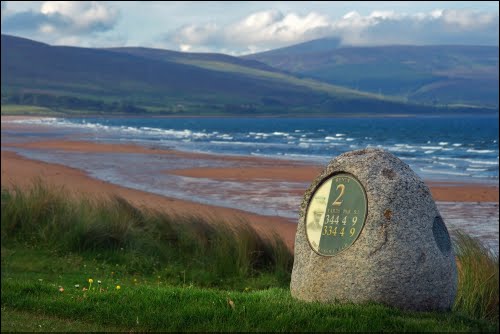
This is Brora in Scotland. The name Brora is derived from ancient Norse, meaning 'river with a bridge.' A small industrial village having at one time a coal pit, boat building, salt pans, fish curing, lemonade factory, the new Clynelish Distillery (as well as the old Clynelish distillery which is now called the Brora distillery), wool mill, bricks and a stone quarry. Stone from the quarry was used in the construction of London Bridge, Liverpool Cathedral and Dunrobin Castle. When in operation, the coalmine was the most northerly coalmine in the UK. Brora was the first place in the north of Scotland to have electricity thanks to its wool industry.

Thursday, July 30, 2015

CUBONE CHURCH, SOMERSET


Culbone Church, located in the village of Culbone in Somerset, is said to be the smallest church in England. The church, dedicated to the Welsh Saint Beuno, has been designated by English Heritage as a Grade I listed building and the churchyard cross is Grade II*. This beautiful church is recorded in the Domesday Book.

Sunday, June 07, 2015

NORWICH, NORFOLK


Norwich is a city on the River Wensum in England. It is the regional administrative centre and county town of Norfolk. During the 11th century, Norwich was the largest city in England after London, and one of the most important places in the kingdom. Until the Industrial Revolution, Norwich was the capital of the most populous county in England.

Monday, April 13, 2015

LINCOLN CASTLE, LINCOLNSHIRE

William the Conqueror built Lincoln Castle, in 1068, on a strategic site that had once been used by the Romans. The castle unusually has two mottes, one is topped by a 12th century shell keep called the Lucy Tower, and the other is topped by a 19th century tower that was used as an observatory. A full circuit of curtain walls remain, most of which can be walked on.
The buildings that remain within the castle are from its later use as a prison and court. The Victorian court is still used today, but the prison is no longer in use and can be visited. The prison has the world's only surviving 'Pentonville System' chapel, where prisoners were kept apart in separate cells. Many of the prisoners who were executed at the castle where buried at the base of the Tower mound or inside the Lucy Tower. The castle also has one of the four remaining original copies of the Magna Carta, which can be viewed in an exhibition area in the old prison building.

Sunday, March 15, 2015

WINDSOR, BERKSHIRE


Windsor is one of England's premier tourist and weekend break destinations.Windsor Castle is an official residence of The Queen and the largest occupied castle in the world. A Royal home and fortress for over 900 years, the Castle remains a working palace today. The town of Windsor has a population of over 31,000 people and is situated beside the river Thames in Berkshire. It is arguably one of Berkshire's prettiest towns.

Thursday, February 12, 2015

ARGYLL, SCOTLAND


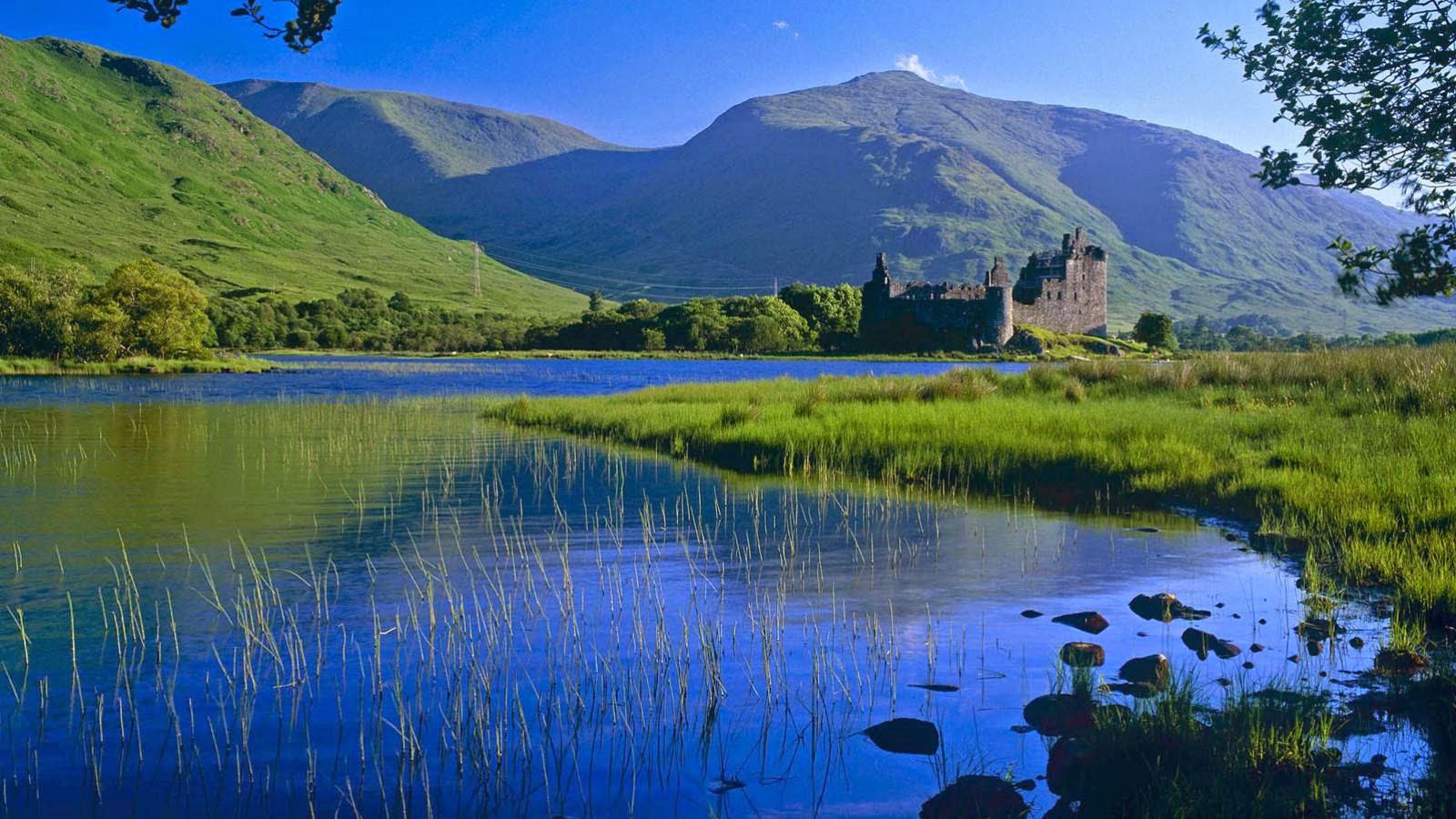
Argyll is situated in the west part of Scotland. Here you'll find the magic of the west: sea-lochs and mossy, lush woodlands, long views to a horizon where the sun sinks behind the islands. This is a beguiling and romantic kind of place.

Tuesday, January 06, 2015

DERWENTWATER LAKE, CUMBRIA


Derwentwater is one of the principal bodies of water in the Lake District National Park in north west England. It lies in the county of Cumbria. The lake is both fed and drained by the River Derwent. It measures approximately 3 miles long by 1 mile wide and is some 72 feet (22 m) deep. There are several islands within the lake, one of which is inhabited. Derwent Island House, an 18th-century residence, is a tenanted National Trust property open to the public on five days each year.
Derwentwater is a place of considerable scenic value.

Monday, November 17, 2014

DARTMOOR, DEVON


Dartmoor is an area of moorland in south Devon, England. Protected by National Park status as Dartmoor National Park, it covers 954 square kilometres.
The moorland is capped with many exposed granite hilltops known as tors, providing habitats for Dartmoor wildlife. The highest point is High Willhays, 621m above sea level. The entire area is rich in antiquities and archaeology.
Parts of Dartmoor have been used as military firing ranges for over 200 years. The public enjoy extensive access rights to Dartmoor (including restricted access to the firing ranges) and it is a popular tourist destination.

Thursday, October 02, 2014

ARTHUR'S SEAT, EDINBURGH, SCOTLAND

The highest point of Holyrood Park is Arthur's Seat, a dormant volcano, and sits 251metres above the sea level giving excellent view of the city; it is also the site of a large and well preserved fort.  This is one of four hill forts dating from around 2000 years ago.  With its diverse range of flora and geology it is also a site of Special Scientific Interest.
Within the park you can also visit St Anthony’s Chapel - a 15th century medieval chapel, Salisbury Crags – a series of 150 foot cliff faces dominating Edinburgh’s skyline as well as Duddingston Loch – a fresh water loch rich in bird life.

Sunday, August 10, 2014

CONNEMARA, IRELAND

Connemara, situated at the very edge of Europe, on the west coast of Ireland, is one of the most beautiful, unspoilt places it's possible to find. From the rugged Twelve Bens mountain range in the north through lake-rich Roundstone Bog to the golden beaches reaching out into the Atlantic Ocean, you'll know you're in Connemara by the light that constantly changes the mood and tone of the landscape. Connemara has long been regarded as the real emerald of Ireland.

Wednesday, July 16, 2014

LEEDS, YORKSHIRE

A beautiful photo by Jonathan Emery. Leeds Bridge is a historic river crossing in Leeds. The present cast iron road bridge dates from 1730.The medieval town of Leeds centred on 13th century burgess building plots either side of a wide road from the river crossing called Bridge Gate, now Briggate. A wool cloth market operated at Leeds Bridge, becoming the centre of wool trade for the West Riding of Yorkshire in the late 17th century.